


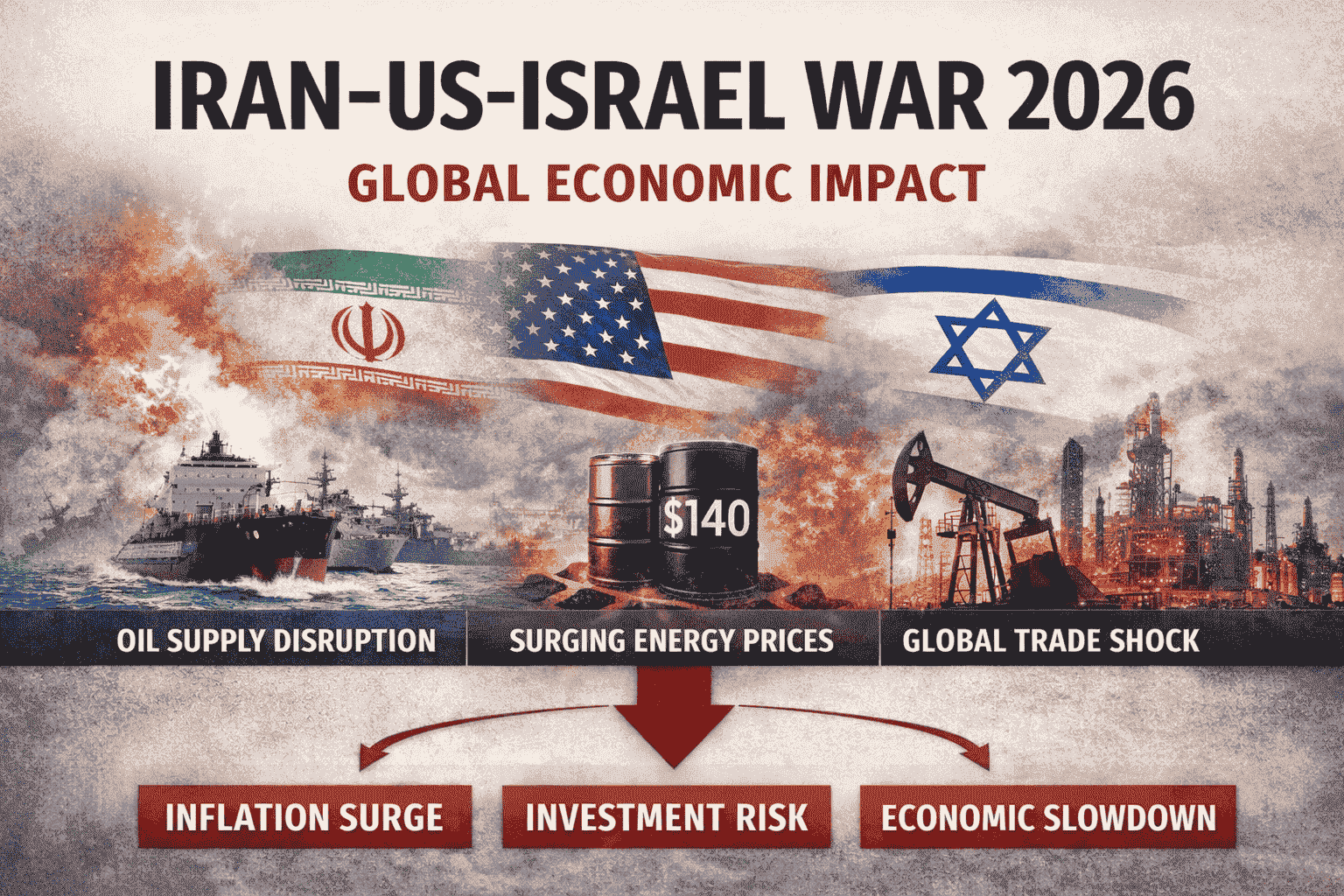
The conflict involving Iran, the United States and Israel has become more than a regional geopolitical crisis. Its consequences now extend into global energy markets, international trade, investment decisions, inflation, supply chains and financial markets.
The most important question for businesses and investors is no longer simply whether the conflict will continue. The bigger question is how prolonged geopolitical instability could reshape the global economy and international investment environment.
The economic impact has been uneven. Some markets and sectors have benefited from higher defence spending, energy investment and demand for alternative infrastructure. Others, particularly energy-importing economies and vulnerable developing countries, face higher costs and greater economic pressure.
The International Monetary Fund has described the global economy as broadly resilient so far, but has also warned that the impact of the war is highly uneven and that renewed escalation remains a significant downside risk.
How the Iran, US and Israel War Affects the Global Economy
Wars do not affect the global economy through a single channel. The economic consequences of this conflict spread through several interconnected systems.
These include:
- Oil and energy prices
- International shipping routes
- Inflation
- Interest rates
- Business confidence
- Foreign direct investment
- Financial market volatility
- Supply chain disruption
- Food and fertilizer prices
- Government spending
The Middle East remains critically important to global energy and trade networks. Any serious disruption in the region can therefore affect businesses and consumers thousands of miles away.
The Strait of Hormuz is particularly important. The conflict has disrupted energy flows through the waterway and forced the global economy to confront the risks associated with dependence on major maritime chokepoints. The IMF reported that the initial disruption represented one of the largest oil-market shocks in decades, although inventories, alternative production and lower demand helped prevent an even larger price spike.
Rising Oil Prices and Global Inflation
Energy is one of the fastest channels through which geopolitical conflict affects the global economy.
Higher oil prices increase costs for:
- Transportation companies
- Airlines
- Shipping companies
- Manufacturers
- Agricultural businesses
- Logistics providers
- Consumers
When companies pay more for fuel and transportation, those costs can eventually move through the wider economy.
For example, a manufacturer may face higher costs for transporting raw materials. A shipping company may pay more for fuel and insurance. A retailer may then face higher delivery expenses.
Ultimately, consumers may pay higher prices.
The IMF’s July 2026 outlook said the war had contributed to an increase in energy prices and that global disinflation had stalled. The institution projected global growth of around 3 percent in 2026 while revising its global inflation outlook upward.
Oil markets have also remained highly sensitive to developments in the conflict. Recent escalation and renewed concerns over Middle Eastern supply have contributed to significant market volatility and higher crude prices.
Why higher oil prices matter for investments
Higher energy prices can affect investment decisions in several ways.
Companies may delay expansion plans because operating costs become less predictable. Investors may also move away from sectors that are highly sensitive to consumer spending or transportation costs.
At the same time, some sectors may benefit.
Potential beneficiaries can include:
- Energy producers
- Defence companies
- Oil infrastructure businesses
- Renewable energy companies
- Energy storage companies
- Logistics infrastructure providers
However, no sector should be considered automatically safe. The longer the conflict continues, the greater the risk that higher energy costs begin to affect wider economic growth.
The Strait of Hormuz and International Trade
The Strait of Hormuz is one of the world’s most strategically important maritime passages.
Disruption in the region can affect the movement of:
- Crude oil
- Petroleum products
- Liquefied natural gas
- Commercial cargo
Recent shipping data has shown that traffic through the waterway remains significantly affected by the conflict.
This creates problems that go beyond oil prices.
Shipping companies may need to:
- Change routes
- Pay higher insurance premiums
- Increase security spending
- Accept longer delivery times
- Use alternative ports and transport networks
These costs can make international trade more expensive.
The conflict has also exposed a larger structural problem within global commerce.
A significant portion of international trade depends on a relatively small number of strategic maritime routes. When one of those routes becomes unstable, companies may discover that their supply chains have limited alternatives.
This could encourage businesses and governments to invest more heavily in alternative infrastructure, including pipelines, ports and trade routes that bypass strategic chokepoints. Reuters has reported that Gulf countries are accelerating investments in infrastructure designed to reduce dependence on the Strait of Hormuz.
How the War Is Affecting Global Investments
Investment decisions depend heavily on confidence.
Businesses are generally more willing to invest when they can reasonably estimate:
- Future energy costs
- Inflation
- Interest rates
- Exchange-rate risks
- Supply chain reliability
- Political stability
War creates uncertainty across all of these areas.
As a result, international investors may become more cautious about committing capital.
Foreign direct investment could become more selective
Companies expanding internationally may increasingly prefer countries that offer:
- Political stability
- Reliable energy supplies
- Strong legal systems
- Diversified trade routes
- Predictable regulatory environments
This does not necessarily mean global investment will collapse.
Instead, capital may become more selective.
A multinational company considering several possible countries for a new factory, regional office or logistics centre may give greater importance to geopolitical risk than it did previously.
Countries that can demonstrate resilience and stability could benefit from this shift.
Financial Markets and Investor Behaviour
Financial markets often react to geopolitical events before their full economic consequences become visible.
Investors may initially move toward assets perceived as relatively defensive, while selling investments considered more vulnerable to economic disruption.
Typical market reactions can include:
- Higher oil prices
- Increased volatility
- Pressure on airline and transportation stocks
- Higher demand for certain defence-related investments
- Shifts in government bond markets
- Changes in currency valuations
The important point is that financial markets do not always move in the same direction as the real economy.
Some major stock markets have remained resilient despite the conflict, while the economic burden has fallen more heavily on consumers, vulnerable countries and industries exposed to rising energy costs.
This creates a divided economic environment.
Investors may see opportunities while households and businesses face higher living and operating costs.
The Impact on Interest Rates and Government Borrowing
Higher energy prices can make the fight against inflation more difficult.
Central banks generally face a complicated situation when an external shock pushes prices higher.
If inflation rises because of energy and transportation costs, central banks may hesitate to reduce interest rates quickly. In some circumstances, tighter monetary policy may remain necessary.
Higher interest rates can affect:
- Business loans
- Mortgages
- Corporate expansion
- Venture capital
- Property investment
- Government borrowing
Governments are also facing additional financial pressure.
Higher defence spending, energy support programs and humanitarian costs can increase public expenditure.
At the same time, higher borrowing costs make it more expensive for governments to finance deficits.
Recent global market developments have shown how concerns about inflation and energy prices can contribute to rising bond yields and tighter financial conditions.
Emerging Economies Face Greater Risks
The economic consequences of the war are not distributed equally.
Energy-importing countries with limited financial resources are among the most vulnerable.
A wealthy country may have strategic energy reserves, strong currencies and the financial capacity to support households and businesses.
A lower-income country may not.
Higher prices for:
- Fuel
- Food
- Fertilizer
- Transportation
can therefore create much more serious economic consequences in developing economies.
The IMF, World Bank, International Energy Agency and World Trade Organization have collectively warned that the conflict’s effects are highly uneven and that vulnerable economies are facing significant pressure from higher energy and commodity costs.
Food Security and Agricultural Investment
Energy markets are not the only concern.
Agriculture depends heavily on transportation, fuel and fertilizers.
When these costs increase, farmers and agricultural businesses may reduce spending or increase prices.
Higher fertilizer costs are particularly concerning because the effects may continue into future harvests.
The economic impact can therefore extend far beyond the original conflict zone.
Higher agricultural costs can contribute to:
- Food inflation
- Lower agricultural production
- Increased pressure on government budgets
- Greater demand for food imports
The joint international response from major economic institutions has specifically identified food security and fertilizer prices as areas of concern.
Winners and Losers in the Investment Market
Every major economic shock creates both risks and opportunities.
Sectors that may benefit
Energy infrastructure
Countries and companies may invest more heavily in:
- Pipelines
- LNG infrastructure
- Alternative export routes
- Energy storage
- Grid resilience
Renewable energy
Higher fossil fuel prices can strengthen the economic case for:
- Solar energy
- Wind energy
- Electric vehicles
- Battery technology
The conflict may accelerate efforts to reduce long-term dependence on vulnerable energy routes.
Defence and cybersecurity
Governments may increase spending on:
- Defence systems
- Drones
- Cybersecurity
- Critical infrastructure protection
This can create investment opportunities, although these sectors also depend heavily on government budgets and geopolitical conditions.
Alternative logistics
The disruption of major shipping routes may increase investment in:
- Ports
- Railways
- Pipelines
- Regional logistics hubs
- Alternative shipping networks
Sectors under pressure
Industries most exposed to high energy costs could face greater difficulties.
These may include:
- Airlines
- Shipping companies
- Tourism businesses
- Transport companies
- Energy-intensive manufacturers
Consumer-facing companies may also face weaker demand if households spend more on fuel, food and other necessities.
How Businesses Should Respond
For international businesses, the lesson is clear.
Geopolitical risk should no longer be treated as a distant issue handled only by governments.
It is now a business-planning issue.
Companies should review:
Supply chain concentration
Does the business depend too heavily on one country, supplier or shipping route?
Energy exposure
How would higher fuel and electricity prices affect profitability?
Currency risk
Could geopolitical uncertainty create exchange-rate volatility that affects international payments?
Banking and payment continuity
Could sanctions, financial restrictions or geopolitical instability interrupt international transactions?
Country risk
Does the business operate in countries that could face secondary economic effects from the conflict?
Insurance costs
Are political risk and cargo insurance costs increasing?
Businesses that identify these vulnerabilities before a crisis escalates are generally in a stronger position to adapt.
What Does the Future Hold for Global Investment?
The future impact depends largely on the duration and intensity of the conflict.
A limited de-escalation could allow energy prices and shipping activity to normalize gradually.
However, a prolonged or expanded conflict could create more serious consequences.
The IMF’s economic outlook has repeatedly emphasized that its baseline forecasts depend on assumptions about the conflict and the normalization of energy markets. A longer disruption could create greater pressure on global growth, inflation and vulnerable economies.
The current global economy has proved more resilient than many observers initially expected.
But resilience should not be confused with immunity.
Global energy inventories and other buffers helped absorb the initial shock, yet the IMF has warned that many of those buffers have been reduced.
That means another major escalation could have a larger economic effect than an earlier shock.
Final Thoughts
The Iran, US and Israel war demonstrates how quickly a regional conflict can affect global investment and economic activity.
Its consequences are visible across:
- Energy markets
- Shipping routes
- Inflation
- Financial markets
- Food security
- Business investment
- Government borrowing
The world economy has remained more resilient than initially feared, but the risks have not disappeared.
For investors, the most important challenge is managing uncertainty rather than attempting to predict every geopolitical development.
For international businesses, the conflict reinforces the importance of diversified supply chains, reliable banking arrangements, alternative logistics options and a serious approach to geopolitical risk.
The long-term economic consequences may ultimately extend beyond the current conflict itself. Governments and companies are already reconsidering how energy, trade and investment systems should be designed in a world where geopolitical stability can no longer be assumed.
The biggest lesson is simple: geopolitical events are no longer separate from business strategy. They are increasingly part of it.
