


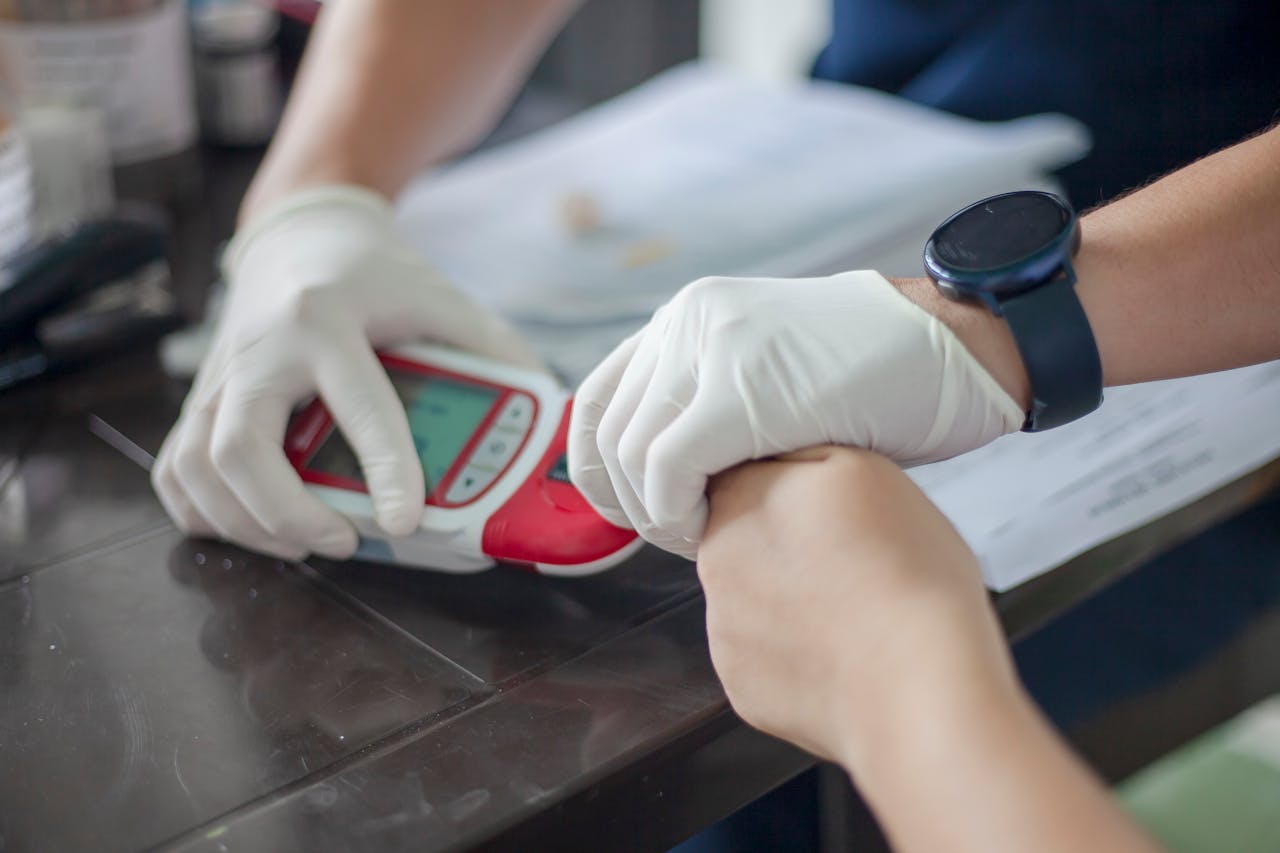
You need a hemoglobin reading — and you need it now, not hours later from a central lab. Whether you’re a nurse conducting an anemia screening in a rural clinic, a physician making a pre-operative decision, or a procurement manager sourcing diagnostic equipment, the term hema metre keeps coming up. But what exactly is it? How does it work? And how do you know you’re buying a reliable one?
This guide answers all of it — clearly, completely, and without the jargon overload. By the time you finish reading, you’ll understand how hema metres work, where they’re used, how accurate they really are, and how to choose the right model for your setting.
Quick Answer
A hema metre (also spelled hemoglobin meter or haemoglobin metre) is a portable, handheld diagnostic device that measures hemoglobin concentration in a small blood sample — typically from a finger prick — within seconds. It is used for anemia screening, pre-operative assessment, blood donation eligibility checks, and chronic disease monitoring at the point of care.
Table of Contents
What Is a Hema Metre?
Definition
Hema metre is the British English spelling variant for a hemoglobin meter — a compact, battery-powered medical instrument that determines the hemoglobin (Hb) concentration in a blood sample. It is sometimes written as “haemoglobin metre,” “hema meter,” or “Hb meter,” all referring to the same type of device.
Hemoglobin is the iron-rich protein inside red blood cells that carries oxygen from the lungs to the rest of the body. When hemoglobin levels drop below normal ranges, tissues don’t get enough oxygen — a condition known as anaemia (anemia). Left untreated, anemia causes fatigue, cognitive impairment, and in severe cases, organ damage or death.
Traditionally, measuring hemoglobin required sending blood to a laboratory and waiting for results from a hematology analyzer. A hema metre changes that. It brings the test to the patient — in a clinic, a blood bank, a remote field setting, or even a home environment — and delivers a result in under 60 seconds.
1.6B
People worldwide affected by anemia (WHO estimate)
<60s
Time to result with most portable hema metres
±0.5
g/dL typical accuracy vs. lab analyzer
1989
Year the HEMA digital hemoglobinometer was introduced
How Does a Hema Metre Work?
Most hema metres use one of two core measurement methods: photometry or electrochemical biosensor technology. Both aim to determine how much hemoglobin is present in a given volume of blood, but they go about it differently.
Photometric / Colorimetric Method
A small amount of blood is mixed with a reagent (a chemical solution) inside a cuvette. The reagent converts hemoglobin into a stable compound — typically cyanmethemoglobin (using Drabkin’s reagent) or alkaline hematin detergent (AHD method, which is non-toxic). A light source then shines through the solution, and a photodetector measures how much light is absorbed. The more hemoglobin present, the more light is absorbed. The device translates that absorbance reading into a g/dL value.
The HEMA digital hemoglobinometer — a widely recognized instrument manufactured in India since 1989 — uses this exact photometric approach, supporting both Drabkin’s and AHD methods, along with auto-calibration and a long-life LED light source.
Biosensor / Test Strip Method
Many modern handheld hema metres — particularly those designed for point-of-care use — use single-use test strips with embedded biosensors. A drop of blood from a finger prick is placed on the strip, which is inserted into the meter. An electrochemical reaction occurs, generating a small current proportional to the hemoglobin concentration. This method requires no liquid reagents and is easier to use in field settings.
Clinical Note
“Point-of-care hemoglobin meters have shown good correlation with laboratory analyzers in study conditions, with correlation coefficients typically ranging from r = 0.89 to r = 0.92. However, performance can degrade in real-world community settings where conditions are less controlled — training operators correctly is as important as choosing the right device.”
Who Uses Hema Metres — and Why?
Hema metres are used across a surprisingly wide range of healthcare and non-clinical settings. Here’s where they genuinely make a difference:
- Primary care clinics and GP practices: Quick anemia screening without sending patients to a lab. Decisions about iron supplementation or further testing can be made at the same appointment.
- Blood donation centers: Donor hemoglobin must meet minimum thresholds before donation is allowed. A hema metre gives eligibility results in seconds.
- Surgical and pre-operative settings: Low hemoglobin before surgery significantly increases risk. Portable meters allow rapid pre-op checks even in outpatient surgical suites.
- Maternal and child health programs: Anemia in pregnant women and young children is a major global health concern. Hema metres enable screening at antenatal clinics and community health posts.
- Remote and resource-limited settings: Where laboratory infrastructure is absent or unreliable, hema metres provide life-saving diagnostic capability with minimal power and reagent requirements.
- Sports medicine and performance monitoring: Athletes in endurance sports monitor hemoglobin to track training load, altitude adaptation, and nutritional status.
- Chronic disease management: Patients with chronic kidney disease, HIV, cancer, or inflammatory conditions often need regular hemoglobin monitoring. Home or clinic-based hema metres reduce the burden of repeat lab visits.
Understanding Hemoglobin Levels: What the Numbers Mean
A hema metre is only useful if you know how to interpret the number it gives you. Hemoglobin is measured in grams per deciliter (g/dL). Normal ranges vary by age, sex, and physiological state.
| Population Group | Normal Hb Range (g/dL) | Anemia Threshold (WHO) |
| Adult men | 13.5 – 17.5 | < 13.0 |
| Adult women (non-pregnant) | 12.0 – 15.5 | < 12.0 |
| Pregnant women | 11.0 – 14.0 | < 11.0 |
| Children (6 months – 5 years) | 11.0 – 14.0 | < 11.0 |
| Children (5 – 11 years) | 11.5 – 14.5 | < 11.5 |
| Elderly (65+) | 11.5 – 17.5 (varies) | < 12.0 (women), < 13.0 (men) |
Important: A hema metre reading is a screening tool, not a complete diagnosis. A low result should be confirmed with a full blood count (FBC/CBC) in a clinical laboratory, and the underlying cause of anemia must be investigated separately.
Types of Hema Metres
Not all hema metres are built the same. Understanding the main categories helps you match the right device to your use case.
1. Cuvette-Based Bench-Top Hemoglobinometers
These are semi-portable or desktop instruments like the HEMA digital hemoglobinometer. They use liquid reagents (Drabkin’s or AHD) in glass or semi-micro cuvettes. They offer excellent precision, LED-based photometry, and auto-calibration. Best suited for clinic labs, hospital outpatient departments, and settings where moderate throughput is needed and some lab infrastructure exists.
2. Handheld Biosensor Meters (Strip-Based)
Devices like the HemoCue Hb 301, HemoCue Hb 801, and URIT-12 fall into this category. A single-use microcuvette or biosensor strip is used for each test — no liquid reagents needed. These are highly portable, battery-operated, and ideal for field use, blood drives, and community health programs.
3. Non-Invasive Hemoglobin Meters
The latest generation includes devices like Masimo Pronto, which estimates hemoglobin non-invasively through the fingertip using multi-wavelength spectroscopy — no blood sample required. While convenient, studies have shown these devices require further refinement before matching the accuracy of invasive methods in diverse populations.
| Type | Portability | Sample Required | Best For | Cost Range |
| Cuvette-based (HEMA type) | Semi-portable | Capillary/venous | Clinic labs, moderate throughput | $$ – $$$ |
| Handheld biosensor (HemoCue) | Highly portable | Finger prick | Field use, community screening | $$ – $$$ |
| Non-invasive (Masimo Pronto) | Fully portable | None | Rapid screening where accuracy can be verified | $$$ |
How Accurate Is a Hema Metre?
This is where many buyers — and some clinicians — get misled. A hema metre is not as accurate as a laboratory hematology analyzer. That’s not a flaw; it’s a deliberate design trade-off in exchange for speed, portability, and cost.
Published clinical research offers some useful benchmarks. Studies evaluating the HemoCue Hb 301 and URIT-12 against laboratory reference analyzers found correlation coefficients of r = 0.89 to r = 0.90 — indicating strong but not perfect agreement. Both devices showed a tendency to read higher than reference values on average.
Importantly, device performance in community-based settings tends to be lower than in controlled laboratory conditions. Factors that degrade accuracy include:
- Improper finger-prick technique (excessive squeezing dilutes the sample)
- Dirty or damp fingertips
- Extreme temperatures or humidity
- Outdated or improperly stored reagents or test strips
- Operator inexperience
- Device not calibrated or quality control not run
Research Insight
“Both the MissionHb and URIT-12 meters were excellent at identifying the presence of anemia (AUC > 0.90), but showed weaker agreement with reference analyzers when it came to classifying anemia severity. This means portable hema metres are reliable screening tools — but severity classification should be confirmed in a lab.”
The practical takeaway: use a hema metre to screen and triage. Use a full blood count (FBC/CBC) from a certified laboratory to confirm diagnosis, establish severity, and guide treatment decisions.
How to Use a Hema Metre Correctly
Even a high-quality device produces poor results when used incorrectly. Here’s the correct procedure for a finger-prick hemoglobin test:
- Prepare the patient’s hand.Ask them to warm their hands by rubbing them together or placing them briefly under warm water. A cold finger produces poor capillary blood flow and a suboptimal sample.
- Clean and dry the fingertip.Use an alcohol swab on the side of a fingertip (not the pad). Wait for the alcohol to evaporate completely before puncturing — residual alcohol dilutes the sample.
- Perform the lancet puncture.Use a sterile single-use lancet on the lateral side of the middle or ring finger. Do not puncture the thumb or index finger (too many nerve endings) or the little finger (too thin).
- Wipe away the first drop of blood.The first drop contains tissue fluid from the puncture, which can dilute the sample. Discard it with a clean gauze.
- Fill the cuvette or test strip.Allow the second drop to flow freely — do not squeeze the finger. Touch the cuvette or strip to the blood droplet and let capillary action draw the sample in.
- Insert into the meter and wait for the result.Follow the manufacturer’s instructions. Most meters display the Hb result in g/dL within 15 to 60 seconds.
- Record and document.Record the result with the date, time, operator ID, and any relevant patient identifiers. Note any quality control issues.
Buying Guide: What to Look For in a Hema Metre
Choosing the right hema metre comes down to your specific clinical or operational context. Here are the key factors to evaluate:
Regulatory Approval
Check that the device carries the appropriate regulatory mark for your country — CE marking in Europe, FDA clearance in the USA, or equivalent national approval. Approved devices have been validated against clinical standards. Unregulated devices may give unreliable readings and create medico-legal risk.
Measurement Method
If you need WHO-standardized methodology (important for research or public health programs), look for devices using Drabkin’s or AHD reagent methods. For field use where simplicity is critical, a biosensor strip-based device is usually more practical.
Consumable Availability and Cost
The meter itself is often the smaller part of the long-term cost. Calculate the cost per test including cuvettes, reagents, or test strips. Ensure the consumables are reliably available in your country or region — supply chain gaps can render even a good device useless.
Operating Conditions
If you’re deploying in tropical or variable-temperature environments, verify the device’s operating temperature and humidity range. Some devices perform significantly worse at high temperatures — this matters enormously in field deployments.
Quality Control Features
A quality device will support running control samples at defined intervals to verify accuracy. This is not optional in clinical use — it’s a requirement. Check whether control solutions are available and how the device flags out-of-range control results.
Data Connectivity
Higher-end models support Bluetooth or USB connectivity for integration with electronic health records (EHRs). For hospital and high-volume clinical use, this can significantly reduce transcription errors and administrative burden.
Procurement tip: Before purchasing at scale, request a clinical evaluation period with a small number of units. Test the device against your existing lab analyzer on a representative patient population to verify its performance in your specific context.
Top Hema Metre Models: A Side-by-Side Comparison
| Model | Method | Result Time | Sample Volume | Best Setting | Connectivity |
| HEMA Digital (Kanad) | Drabkin’s / AHD photometric | ~30–60 sec | 250 µL – 1 mL | Clinic lab / hospital | None (basic) |
| HemoCue Hb 301 | Photometric microcuvette | ~45 sec | 10 µL | Field / community | USB (some models) |
| HemoCue Hb 801 | Photometric microcuvette | ~15 sec | 10 µL | Emergency / rapid screening | Bluetooth / LIS |
| URIT-12 | Biosensor strip | ~60 sec | 10 µL | Community / low-resource | None |
| Masimo Pronto | Non-invasive spectroscopy | ~1 min | None | Rapid triage / screening | Bluetooth |
Frequently Asked Questions About Hema Metres
Is “hema metre” the same as a hemoglobin meter?
Yes. “Hema metre” is simply a British English or informal search-term spelling of hemoglobin meter (or haemoglobin metre in formal British spelling). All these terms refer to the same category of device: a portable instrument that measures hemoglobin concentration in blood.
Can a hema metre diagnose anemia?
A hema metre can identify low hemoglobin, which is the key indicator of anemia. However, it cannot identify the cause of anemia — whether iron deficiency, B12 deficiency, hemolysis, chronic disease, or another factor. A full blood count from a certified laboratory is needed to confirm the diagnosis and guide treatment.
How accurate is a portable hema metre compared to a lab test?
Well-validated portable hema metres typically show correlation coefficients of r = 0.89–0.92 against laboratory analyzers, with mean bias values within ±0.5 g/dL in optimal conditions. Accuracy can decline in field settings due to operator technique, extreme temperatures, or consumable storage issues. They are reliable for screening but should not replace lab confirmation for clinical decisions.
What is the difference between Drabkin’s reagent and AHD in hemoglobin meters?
Drabkin’s reagent converts hemoglobin to cyanmethemoglobin and is considered the gold-standard photometric method. However, it contains toxic cyanide compounds. Alkaline Hematin Detergent (AHD) is a non-toxic alternative that achieves comparable accuracy while being safer for users and the environment. Both are WHO-recognized methods.
Can non-clinical staff or community health workers operate a hema metre?
Yes, most handheld hema metres are designed for use by trained non-laboratory staff. Studies have shown community health workers can achieve comparable anemia detection accuracy to trained technicians when using well-designed devices and following standardized protocols. Structured training and periodic quality control checks are essential.
How often should a hema metre be calibrated?
Calibration frequency depends on the manufacturer’s instructions and your institution’s quality management protocols. As a general rule, run quality control samples at least at the start of each day of use, after opening a new batch of reagents or strips, after any device maintenance, and whenever you suspect a reading may be incorrect. Keep a log of all QC results.
Conclusion: Is a Hema Metre Right for Your Setting?
A hema metre is one of the most practical point-of-care diagnostic tools available — small enough to fit in a jacket pocket, fast enough to support decisions in real time, and accurate enough to meaningfully improve patient care in both clinical and community settings.
Its greatest strength is bringing hemoglobin testing to the patient rather than the other way around. For anemia screening programs, blood donation eligibility, pre-operative assessment, and chronic disease management, it’s an investment that pays off quickly — in better workflow, faster decisions, and improved patient outcomes.
Its key limitation is also worth keeping in mind: a hema metre is a screening tool, not a laboratory. Use it to identify who needs further investigation, not as the final word on hemoglobin status in high-stakes clinical decisions.
When buying, prioritize regulatory approval, proven accuracy in published studies, reagent or strip availability in your market, and the environmental conditions of your deployment. When using, invest in training — because even the best device produces unreliable results in poorly trained hands.
Ready to Choose Your Hema Metre?
Use this guide to compare models, evaluate accuracy data, and request a clinical evaluation unit before purchasing at scale.
Medical Disclaimer: This article is for informational purposes only. It does not constitute medical advice, diagnosis, or treatment recommendations. Always consult a qualified healthcare professional for clinical decisions. Device accuracy data cited is from peer-reviewed studies linked in the references below.
