


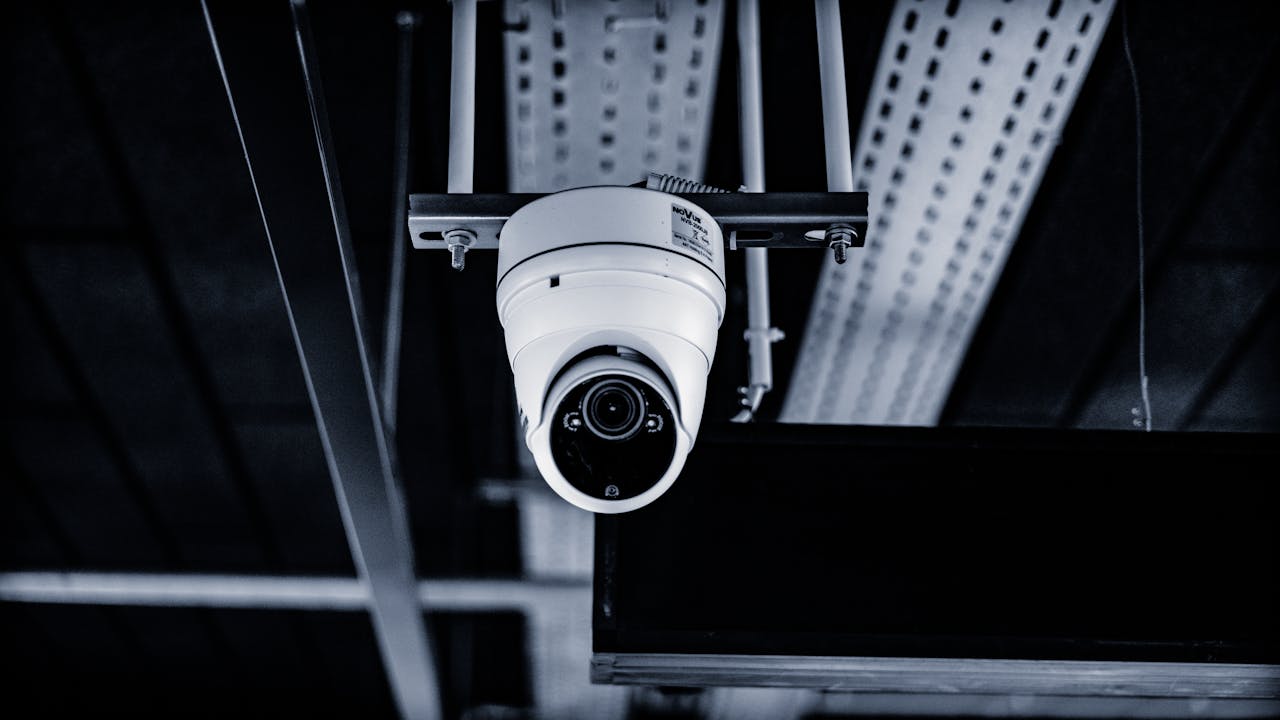
Verkada is a cloud-managed physical security platform offering AI-powered video surveillance, access control, alarms, and environmental sensors. Key AI features include natural language search, real-time alerts, and behavioral analytics. Data is encrypted with AES-128 on-device and AES-256 in the cloud, with compliance covering SOC 2 Type 2, ISO 27001, FIPS 140-2, HIPAA, GDPR, and NDAA.
Table of Contents
- What Is Verkada and Who Is It For?
- Verkada Product Lines: Specs at a Glance
- AI Features: What Verkada’s Platform Actually Does
- Encryption Standards: How Verkada Protects Your Data
- Compliance Certifications Explained
- Real-World Use Cases by Industry
- What to Know Before You Buy
- FAQ
- Conclusion
What Is Verkada and Who Is It For?
Physical security used to mean racks of servers, manual firmware updates, and siloed systems that rarely talked to each other. Verkada was built to replace all of that.
Founded in 2016 and headquartered in San Mateo, California, Verkada is a cloud-managed physical security company whose products — cameras, access control, alarms, intercoms, and environmental sensors — all connect to a single software platform called Command. There’s no on-premise server required.
Over 30,000 organizations across 160 countries Verkada trust the platform. Omdia ranked Verkada the number one provider of Video Surveillance as a Service (VSaaS) worldwide based on global market share in 2024.
The platform targets IT leaders, physical security teams, and operations managers in industries including healthcare, education, manufacturing, retail, government, and smart cities.
Verkada Product Lines: Specs at a Glance
Verkada’s hardware portfolio spans several product categories, all managed through the Command dashboard.
Video Security Cameras
Verkada’s camera lineup ranges from indoor dome and mini models to outdoor bullet, fisheye, and PTZ configurations.
The latest generation fisheye (CF83-E) and 4K PTZ (CP63-E) cameras feature larger image sensors and advanced optical lenses, powered by the Ambarella CV7x line of processors to support cutting-edge edge analytics.
The third-generation (V3) camera series, including the CD53, CH53, and CY53 models, transitions to the Ambarella CV72 System-on-Chip (SoC), which enables complex computer vision tasks to run locally on-device without taxing network bandwidth.
Key camera specs worth noting:
- Resolution options: 4K, 5MP, 1080p depending on model
- Storage: hybrid on-device and cloud
- Connectivity: PoE (Power over Ethernet) standard
- Weatherproofing: vandal-resistant designs available for outdoor use
Access Control
Verkada’s AF64 Access Station Pro unifies a single-door controller, multi-technology reader, 5.5″ touchscreen, and 5MP wide-angle camera into a single PoE-powered device. It supports Face Unlock using a 3D indirect time-of-flight (iToF) sensor for infrared and depth detection, deterring spoofing attempts from photos, videos, or masks.
Access control also supports mobile credentials through Apple Wallet and Android NFC, allowing users to unlock doors with their smartphone.
Alarms and Environmental Sensors
The BP32 wireless alarm panel is powered by a single PoE cable and compact enough to fit discreetly in tight spaces, making it practical for retail stores, clinics, and restaurants.
Verkada’s air quality sensors monitor indoor environments for pollutants and integrate with cameras to provide visual context alongside sensor data.
Remote and Mobile Deployments
The CR63-E Remote Camera with LTE enables organizations to monitor areas that lack power and internet infrastructure. The MT81 Cloud-Managed Security Trailer is a solar-powered platform that supports up to six Verkada devices — designed for mobile or temporary deployments.
AI Features: What Verkada’s Platform Actually Does {#ai-features}
This is where Verkada genuinely differentiates from legacy security vendors. The AI capabilities are not marketing buzzwords — they’re deeply integrated into day-to-day security workflows.
AI-Powered Search
Verkada’s AI-powered search leverages a large language model and a large vision model that lets users search for relevant camera footage of people and vehicles using everyday language, making investigations more intuitive and efficient.
In practice, a user can type something like “person wearing a yellow construction hat” or “white Tesla Model Y with tinted windows” directly into the Command search bar. The search returns relevant results from all cameras in a fleet.
Boolean operators like “NOT” and “OR” are also supported — for instance, searching for an individual “not wearing a safety vest.”
AI-Powered Alerts
Building on search, Verkada allows organizations to configure real-time notifications based on natural language descriptions of events or behaviors. A manufacturing facility could set an alert for “person not wearing a hard hat.” A school could configure one for “loitering near entrance.”
Expanded AI Alerts are now tailored to specific industries and activities, and a new Operator View organizes alerts into a ticketing-style workflow to help security teams work faster and more efficiently.
AI Unified Timeline
The AI-Powered Unified Timeline visually reconstructs the movement of people and vehicles across cameras with a single, map-based timeline. Verkada is particularly useful during incident investigations, allowing security teams to trace a person’s path across an entire property without manually scrubbing through dozens of video feeds.
People and Vehicle Analytics
Verkada’s analytics engine can detect and classify people and vehicles in real time — filtering by attributes like clothing color, vehicle type, and license plate. Importantly, Verkada does not train its People Analytics models to identify sensitive characteristics such as race, ethnicity, or age. People Analytics is disabled by default and requires explicit authorization from an organization’s admin.
AI-Powered Deterrence
Cameras in the V3 series can analyze scenes in real time and trigger automated, context-aware audio warnings. For example, a camera can detect loitering after hours and broadcast a message such as “A reminder that this is private property; please leave now.”
Face Unlock
The AF64 Access Station Pro introduces Face Unlock, which allows users to simply walk up to a door and unlock it by looking at the door reader — no badge, phone, or PIN needed.
Encryption Standards: How Verkada Protects Your Data {#encryption}
Data security is a legitimate concern with any cloud-based platform. Verkada’s architecture addresses this at multiple layers.
At-Rest and In-Transit Encryption
Data on device is encrypted at rest using AES-128. Data in the cloud is encrypted at rest using AES-256. Data in transit to the cloud is encrypted using TLS 1.2 or greater.
This layered approach means video footage is protected both on the camera itself and in Verkada’s cloud infrastructure.
Enterprise Controlled Encryption (ECE)
Verkada introduced an Enterprise Encryption Key option where customers can hold their own encryption keys for video footage, meaning Verkada cannot access it. This addresses privacy concerns for organizations that require full data sovereignty.
This is an important feature for regulated industries where third-party data access — even by the software vendor — must be restricted.
Zero Trust Architecture
Verkada’s security model is built around Zero Trust principles, meaning no device or user is trusted by default, regardless of network location. Access requires continuous verification, and permissions are enforced granularly at the user and device level.
FIPS 140-2 Validated Cryptographic Module
Verkada’s FIPS-validated devices meet the U.S. Federal Information Processing Standard (FIPS) 140-2 encryption standard, as validated by the National Institute of Standards and Technology (NIST). These devices also support FedRAMP Moderate standards.
Compliance Certifications Explained {#compliance}
Compliance is one of the more nuanced aspects of evaluating any enterprise security platform. Here’s a breakdown of Verkada’s current certifications and what they mean in practice.
SOC 2 Type 2
Verkada completes annual SOC 2 Type 2 examinations for the Security Trust Service Criteria, conducted by an independent auditor through the AICPA framework. This validates that Verkada meets industry standards in both the design and ongoing performance of its data security controls.
ISO Certifications
Verkada’s Command Platform holds certification for ISO 27001:2022 (information security management systems), ISO 27017:2015 (information security controls for cloud services), and ISO 27018:2019 (protection of personally identifiable information in public clouds).
HIPAA
For customers in the healthcare industry who are “covered entities” under HIPAA, Verkada supports their compliance obligations as a Business Associate, including secure video storage, role-based access, and audit logging.
GDPR
The GDPR applies to Verkada because the company offers services in the EU (via an Irish data center) and processes EU personal data in the US. Verkada acts as a data processor and enters into Standard Contractual Clauses with customers through its Data Processing Addendum.
Privacy features supporting GDPR compliance include face blur, data retention policies, and granular user permission controls.
NDAA and TAA Compliance
Verkada’s products meet compliance standards for sale in the US, Canada, the UK, the EU, Australia, and New Zealand. FIPS-validated camera models are also TAA-compliant and meet FY 2019 NDAA requirements — relevant for government procurement.
Compliance Summary Table
| Standard | Coverage | Who It Matters For |
| SOC 2 Type 2 | Annual independent audit | Enterprise IT teams |
| ISO 27001:2022 | Information security management | Global organizations |
| ISO 27017/27018 | Cloud services, PII | Cloud deployments |
| FIPS 140-2 | NIST-validated encryption | US government/federal |
| FedRAMP Moderate | Federal cloud standards | US federal agencies |
| HIPAA | Healthcare data protection | Hospitals, clinics |
| GDPR | EU data privacy | EU operations |
| NDAA / TAA | Hardware compliance | Government procurement |
Real-World Use Cases by Industry {#use-cases}
Verkada’s platform publishes outcome data from customers across sectors. Here’s what organizations are actually reporting:
Healthcare: A US hospital reported reducing workplace violence incidents by 83% and cutting investigation times from hours to 15 minutes using AI-powered search.
Education: A UK school reported resolving incidents 98% faster, supported by GDPR-aligned privacy tools like face blur and granular user permissions.
Smart Cities: The City of Las Vegas reported achieving 70% faster deployments while strengthening situational awareness across public spaces.
Manufacturing: A global food producer reported improved audit readiness and loss prevention by linking AI-based analytics with operational data.
What to Know Before You Buy {#before-you-buy}
Verkada is a premium, closed-ecosystem platform. That’s worth understanding before committing.
Pricing: Cameras typically range from $500 to over $3,000 depending on model and features. Each device also requires a cloud license, which can cost between $199 and $1,799 per year per camera based on storage duration and feature tier.
Closed ecosystem: Verkada’s platform is largely proprietary. Integrating with third-party hardware outside the Verkada lineup requires using Command Connector or the public API, which may involve additional setup work.
Security track record: Verkada experienced a notable security incident in 2021 and settled with the FTC. Since then, the company has significantly strengthened its security posture with certifications including SOC 2 Type 2, ISO 27001, and Zero Trust architecture.
Automatic updates: Verkada’s hybrid cloud architecture delivers software and firmware updates automatically, keeping systems current without added maintenance cost.
Market position: Omdia reports the global cloud access control market grew more than 15% in 2024 and is expected to grow at a 27.9% compound annual growth rate through 2029. Verkada leads the Americas market in this category.
FAQ
What encryption does Verkada use? Verkada encrypts on-device data using AES-128, cloud-stored data using AES-256, and all data in transit using TLS 1.2 or higher. Enterprise customers can also manage their own encryption keys through the Enterprise Controlled Encryption feature.
Is Verkada HIPAA compliant? Yes. Verkada acts as a Business Associate for covered entities under HIPAA and provides secure video storage, audit logs, and role-based access controls that support HIPAA compliance.
Does Verkada support GDPR? Yes. Verkada processes EU personal data as a data processor and provides a Data Processing Addendum with Standard Contractual Clauses. Privacy features like face blur and data retention policies support GDPR obligations.
What AI features does Verkada offer? Verkada’s AI capabilities include natural language video search, configurable real-time alerts based on described behaviors, the AI Unified Timeline for movement reconstruction, people and vehicle analytics, AI-powered audio deterrence, and facial recognition for access control.
Is Verkada FIPS 140-2 certified? Yes. Verkada offers FIPS 140-2 validated camera models and a FIPS-validated cryptographic module, validated by NIST and designed to meet FedRAMP Moderate standards for US government deployments.
How many organizations use Verkada? As of 2025, more than 30,000 organizations across 160 countries use Verkada across its product lines.
What is Verkada Command? Verkada Command is the cloud-based software platform that unifies all Verkada hardware — cameras, access control, alarms, intercoms, and sensors — into a single management interface accessible from any browser or mobile device.
Conclusion
Verkada’s platform brings together a broad hardware lineup, genuinely useful AI features, and a well-documented compliance posture in a way that few physical security vendors currently match at scale.
For IT leaders evaluating it: the AI-powered search and alerting capabilities reduce investigative labor significantly, the encryption architecture is clearly documented, and the compliance certifications — SOC 2 Type 2, ISO 27001/27017/27018, FIPS 140-2, HIPAA, and GDPR — cover the bases most enterprise buyers need.
The trade-offs are real: it’s a premium investment, it’s a closed ecosystem, and its past security incident is worth noting. But the company’s post-incident remediation, ongoing third-party audits, and current market leadership suggest a platform that takes security seriously.
If Verkada product specifications, AI features, encryption standards, or compliance requirements are part of your evaluation process, the details above should give you a clear starting point — and a solid set of questions to take into your vendor conversations.
Next step: Request a free trial directly from Verkada’s website to evaluate hardware and software performance in your own environment before committing to a purchase.
